
Highland Foundation Pros
Wall Stabilization in Highland, UT
Bowing basement wall repair using carbon fiber straps or steel anchors. Free estimates, methods matched to the problem.
- 15+ Years local experience
- 500+ Projects completed
- Licensed & Insured
Serving Highland and nearby communities.
A basement wall that's bowing inward means the soil outside is pushing harder than the wall can resist. Highland Foundation Pros stabilizes bowing, leaning, and cracked basement walls using carbon fiber straps or steel wall anchors, matched to how far the wall has already moved.
On Highland's bench lots, spring snowmelt builds up hydrostatic pressure against basement walls fast. That's why bowing often shows up between March and May.
Wall Stabilization
Signs your basement wall needs stabilization
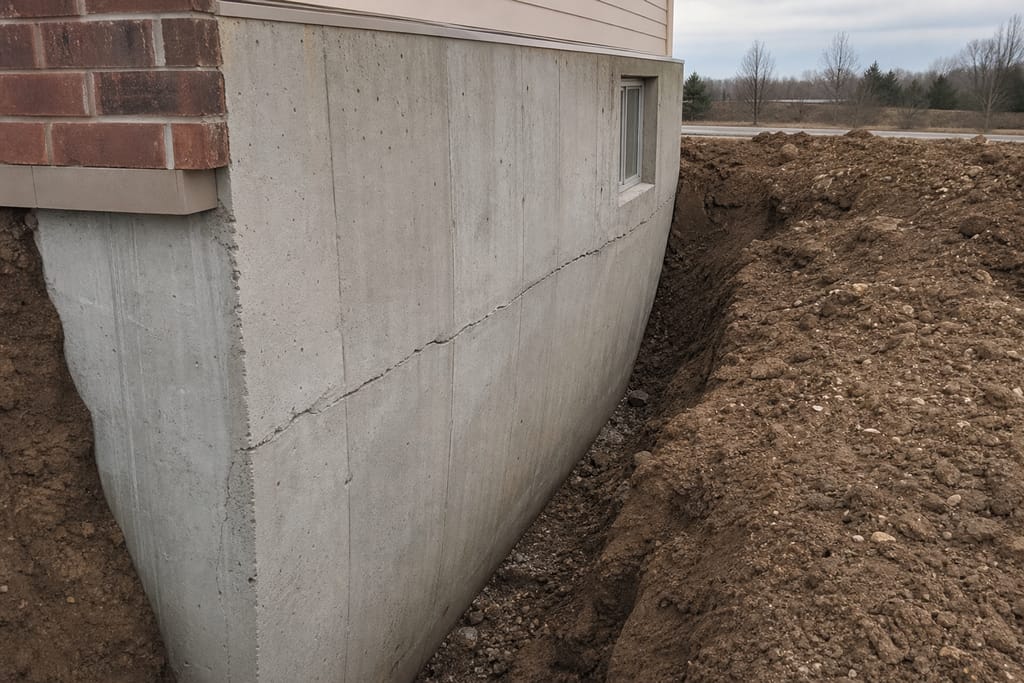
- A horizontal crack running across the wall, usually at mid-height
- Stair-step cracking in block or brick foundation walls
- Visible inward bowing, worse toward the middle of the wall
- The top of the wall pulling away from the sill plate
- Water seeping in along the same crack line every spring
Questions about this?
Get a Free EstimateWall Stabilization
Why Highland basement walls bow
Highland sits on expansive clay along the Wasatch bench. Clay swells when it's wet and shrinks when it dries out, and that cycle pushes against whatever is holding it back. Most of the time, that's your basement wall.
Add a sloped lot into the mix and the pressure isn't even across the wall. One section takes more load than the rest, which is why bowing often shows up off-center rather than dead in the middle. Snowmelt makes it worse. Saturated soil against a basement wall for weeks at a time is a lot more pressure than that same soil sees in July.
Questions about this?
Get a Free EstimateWhat's included
What's included with Wall Stabilization
Typically included: wall inspection and plumb measurement, hydrostatic pressure assessment, anchor or strap installation, crack sealing along the affected wall section.
Optional: exterior grading correction, drainage tie-in to reduce future pressure, interior waterproof coating.
Customer prep: clear a 3-4 foot path along the affected wall inside the basement, move any stored items away from the wall line.
Want a clearer scope?
Get a Free EstimateMaterials
Materials and methods for Wall Stabilization
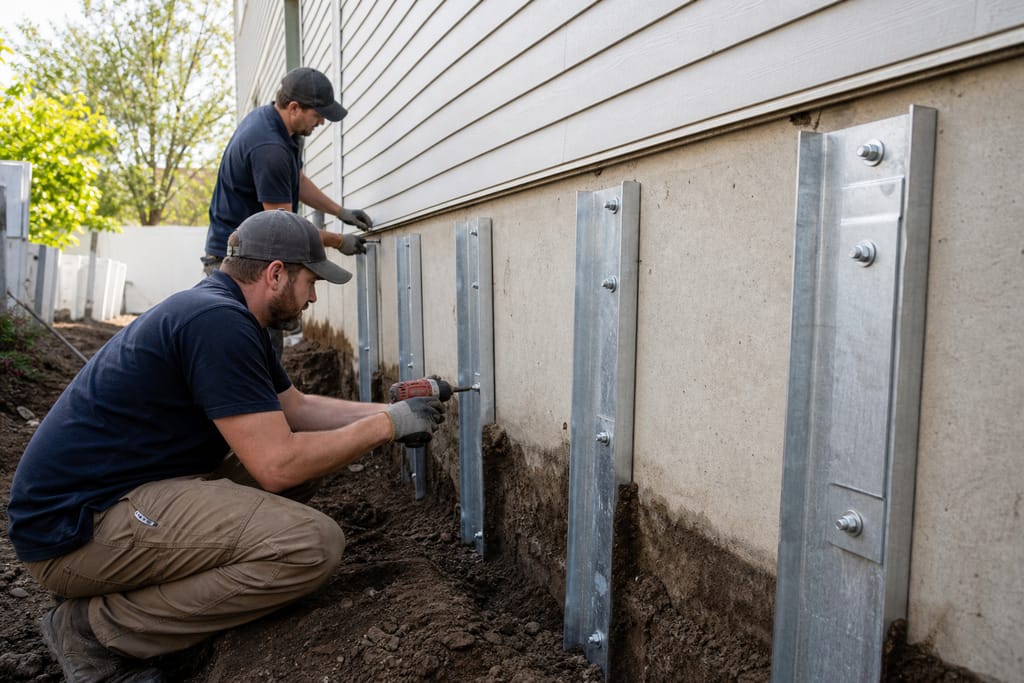
Choice of method depends on how far the wall has bowed and whether excavation is practical.
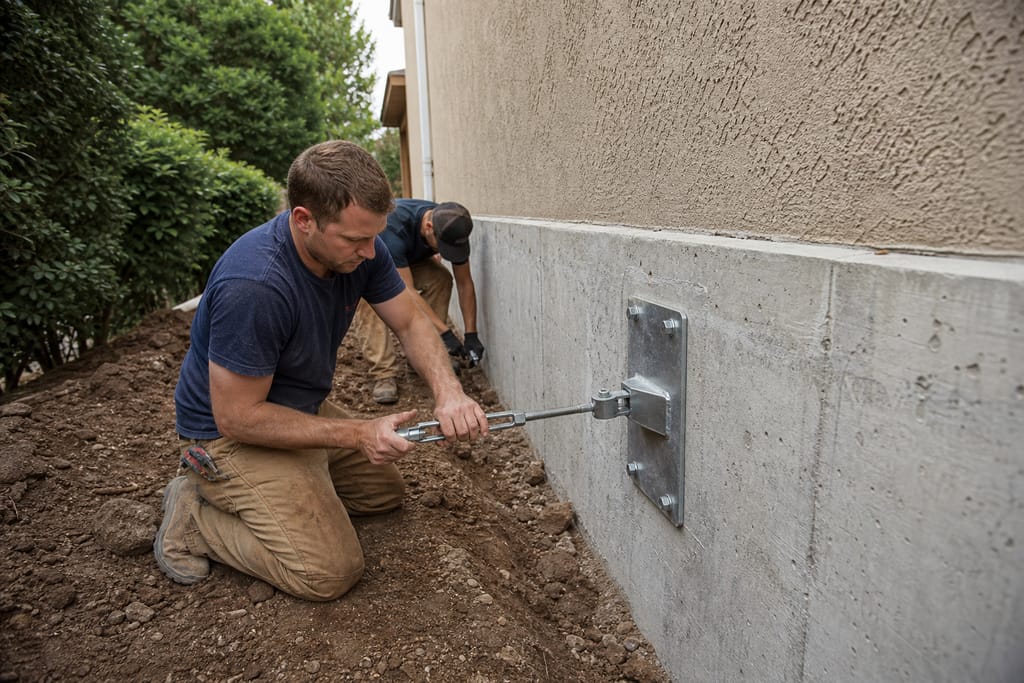
Wall Anchors
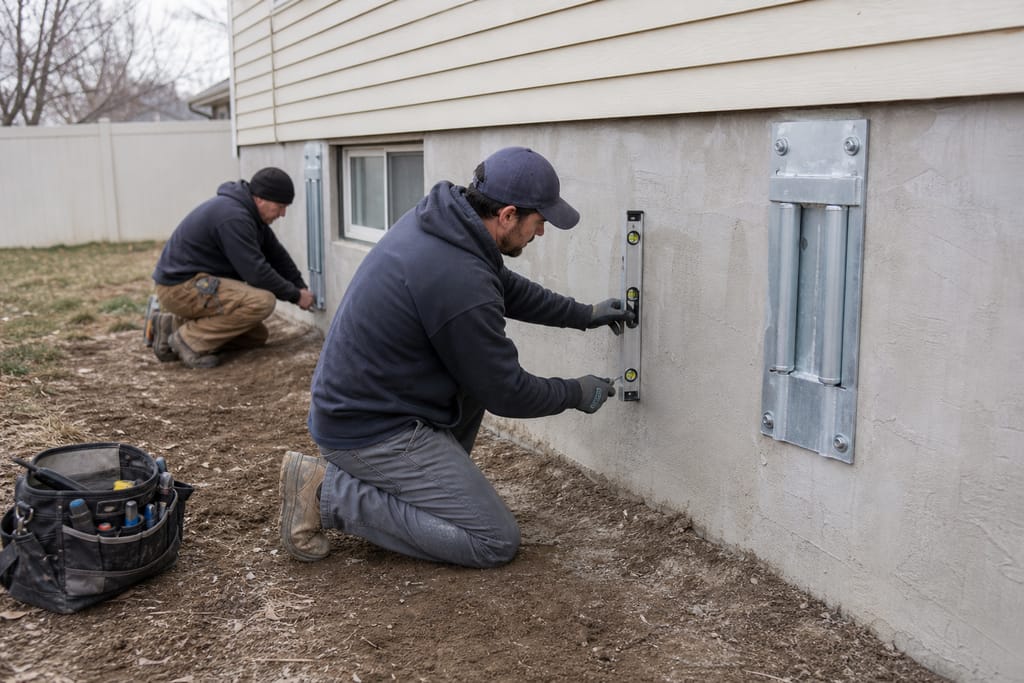
Installed in the yard to counteract inward wall pressure. These work well on Highland's bench lots where there's room to set anchor plates beyond the foundation line.
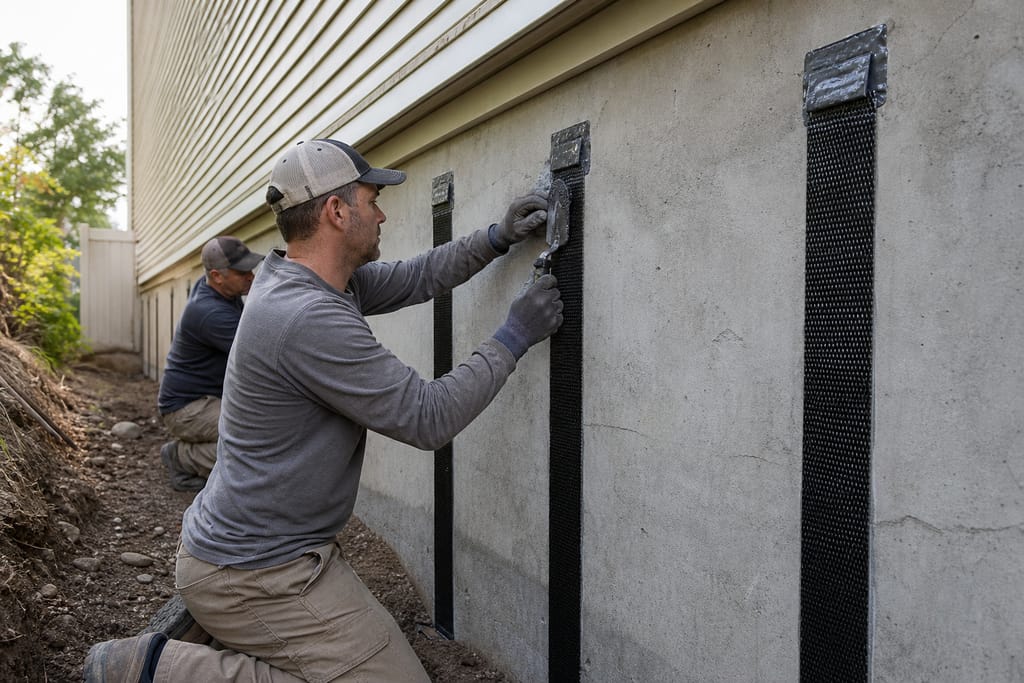
Carbon Fiber Straps
Reinforce walls without requiring extensive excavation. A practical choice on tighter lots or where digging near the wall isn't an option.
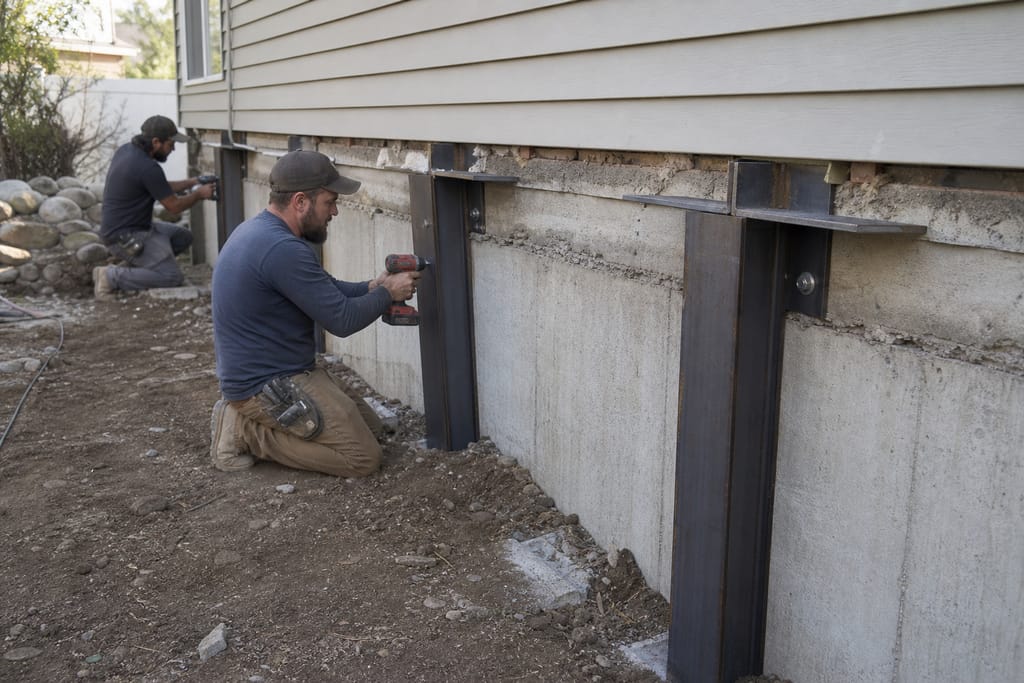
Steel I-Beams
Provide rigid bracing against lateral wall movement for walls with more significant bowing.
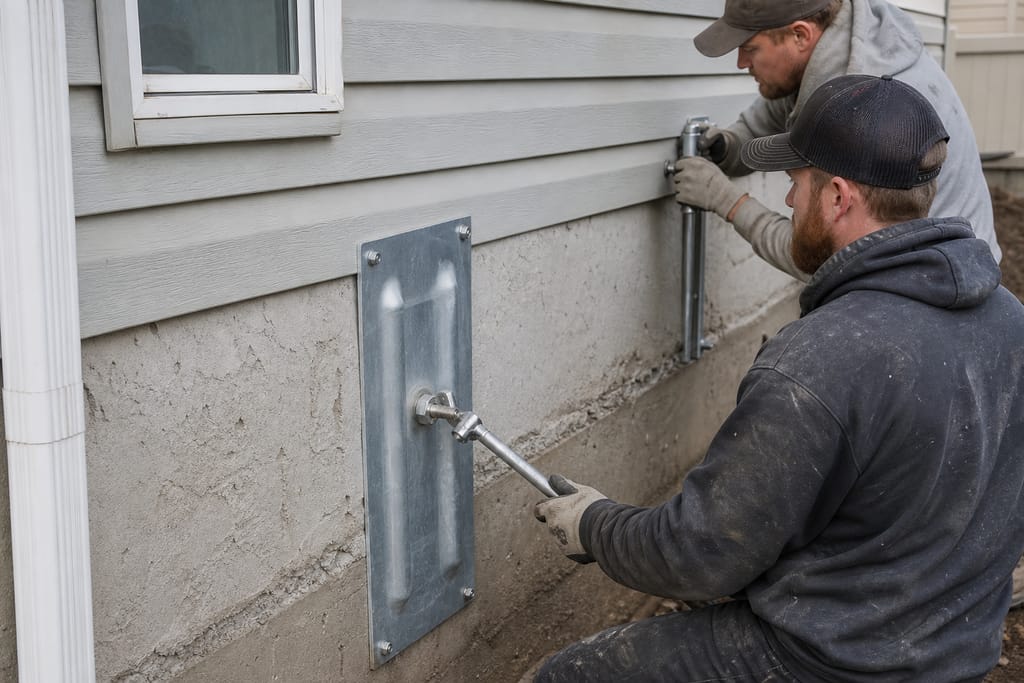
Wall Plates
Distribute anchor tension evenly across the wall surface so the load isn't concentrated at a single point.
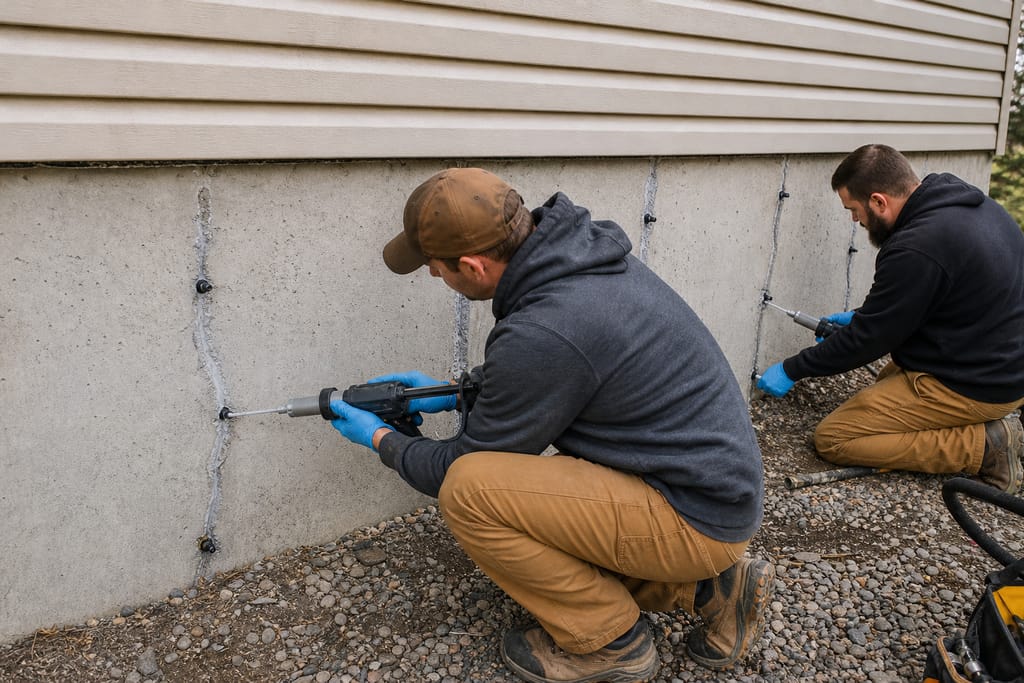
Epoxy Crack Filler
Seals cracks before reinforcement materials are applied, so straps or anchors bond to a clean surface.
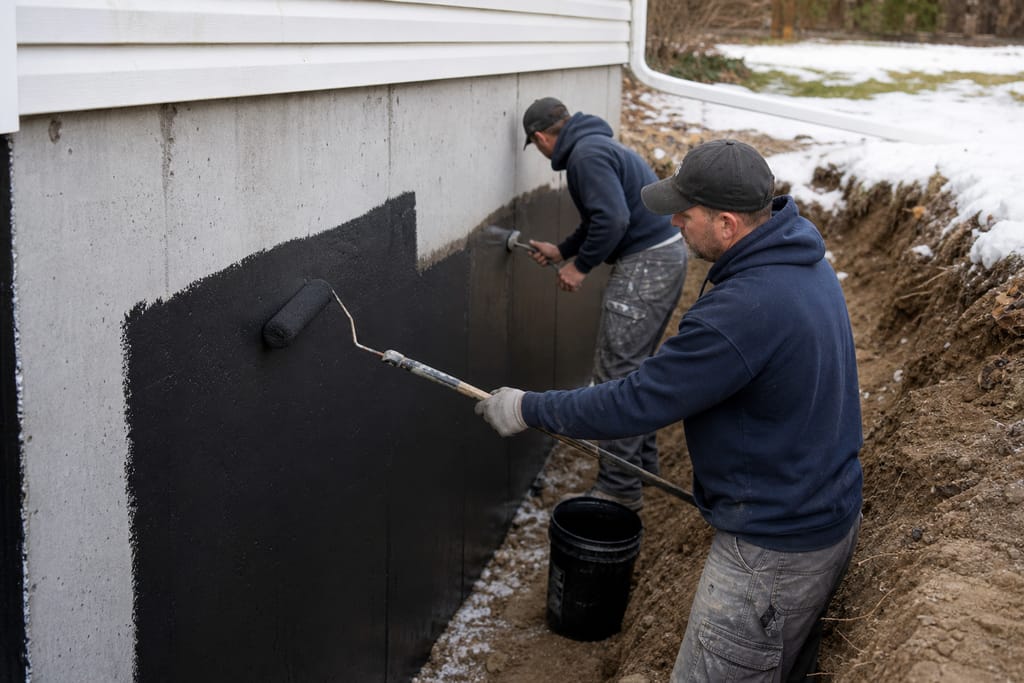
Moisture Barrier Coating
Helps protect reinforced walls from future water damage, especially useful given how much snowmelt pressure these walls see.
Questions on materials?
Get a Free EstimateHow it works
How our Wall Stabilization process works
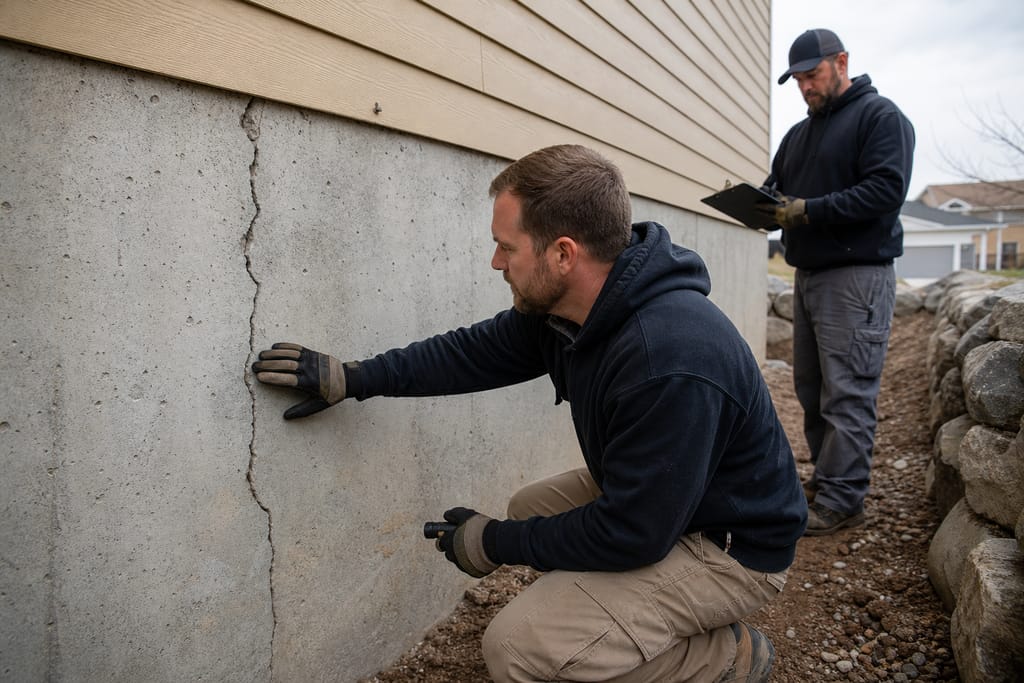 Step 1
Wall Inspection
Walls are examined for bowing, cracking, or leaning indicators.
 Step 2
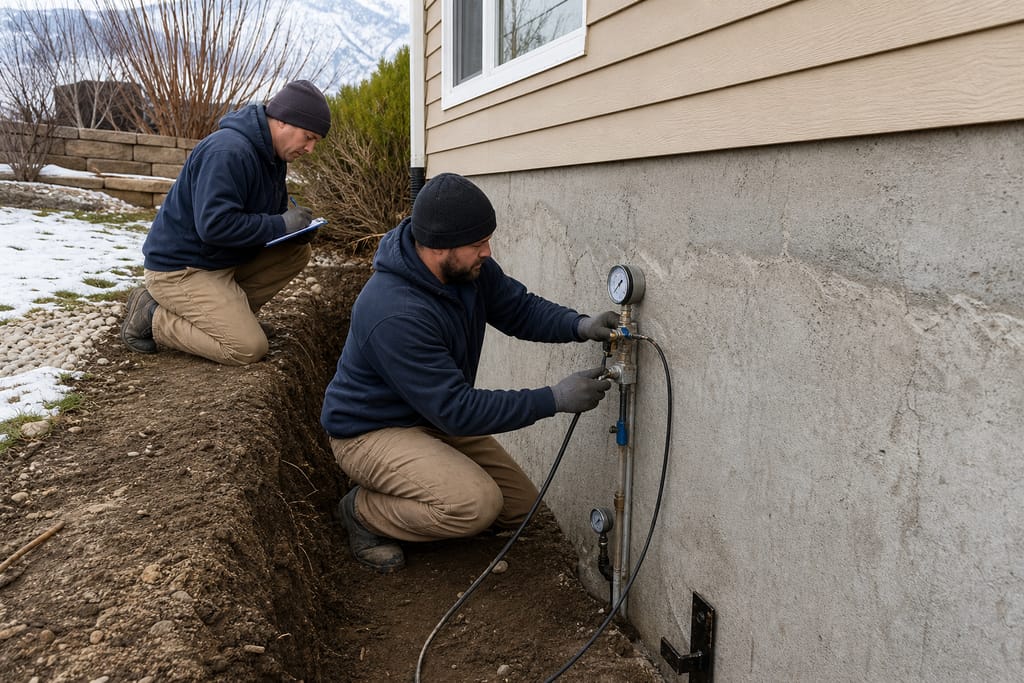
Pressure Assessment
Soil and hydrostatic pressure contributing to wall movement are evaluated.
 Step 3
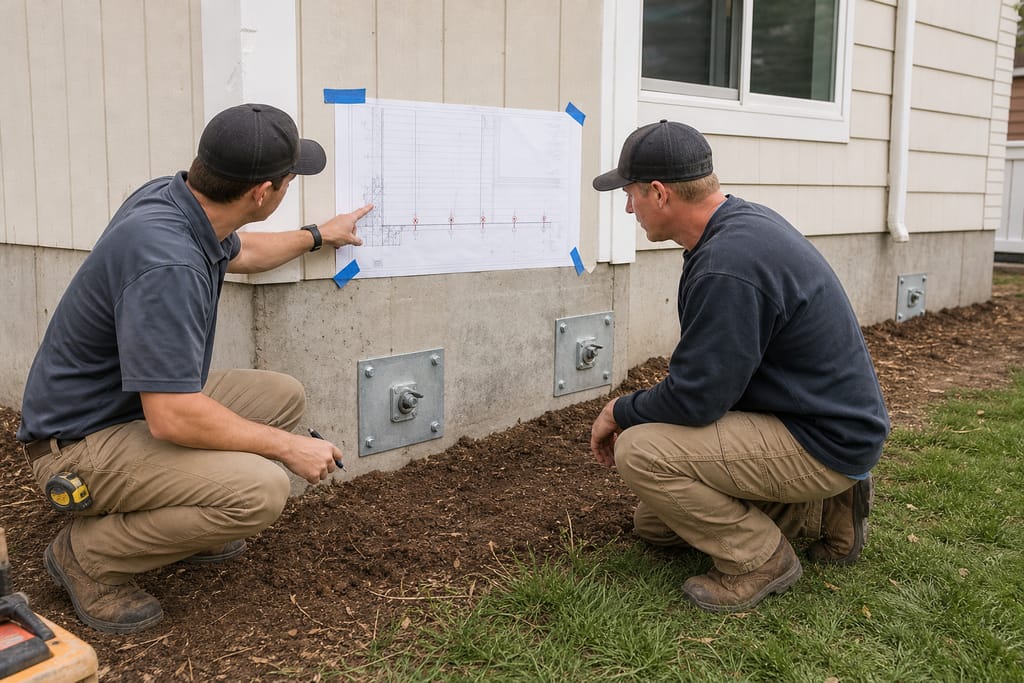
Reinforcement Planning
A stabilization method is selected based on wall condition and severity.
 Step 4
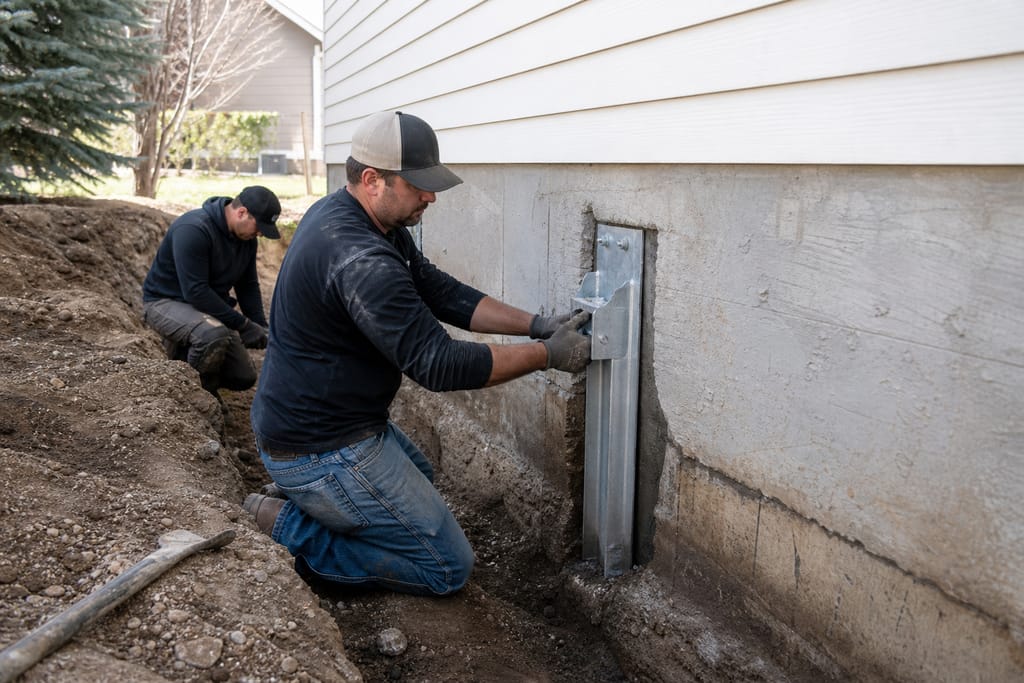
Anchor Or Brace Installation
Support systems are installed to halt further wall movement.
 Step 5
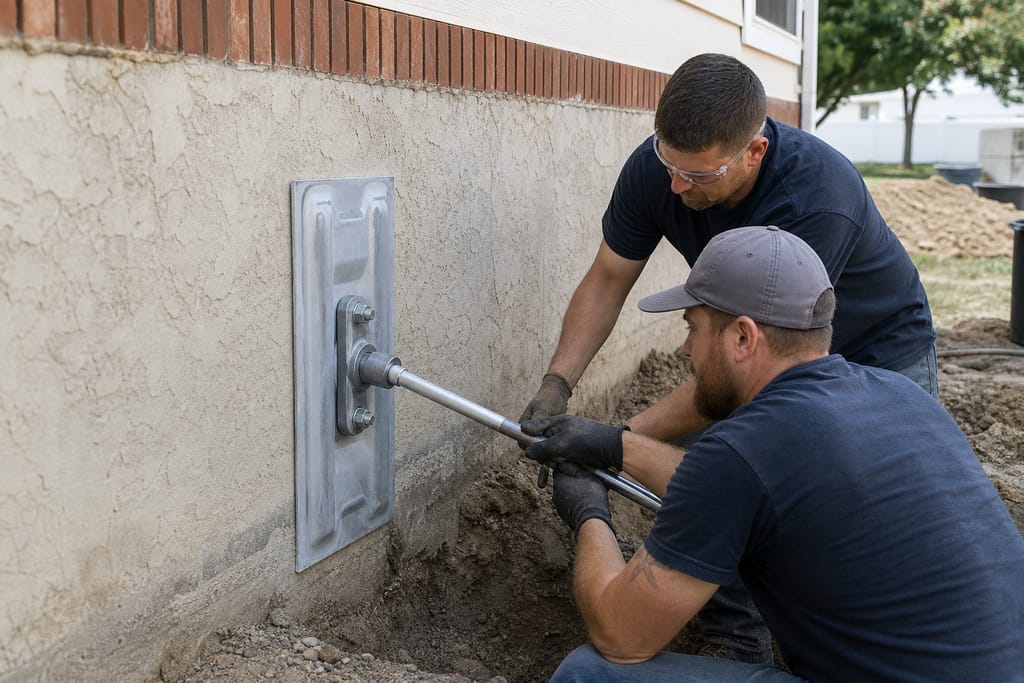
Tensioning Adjustment
Anchors or braces are tightened to gradually stabilize the wall.
 Step 6
Final Inspection
The wall is rechecked to confirm stability and proper installation.
Timeline
How long does a Wall Stabilization take?
- 01
Consult and inspection
same day - 02
Diagnosis and written estimate
1–2 days - 03
Anchor or strap installation
1 dayfor most single-wall jobs
- 04
Tensioning and final check
same dayfollowing install
Need a schedule that fits?
Get a Free EstimateCost
What does a Wall Stabilization cost in Highland?
A free estimate gets you a number specific to how far your wall has moved.
| Project type | Typical range | What’s included |
|---|---|---|
| Carbon fiber straps | $350–$900 | per strap, for walls with minor to moderate bowing. |
| Wall anchor system | $700–$1,200 | per anchor, for walls bowing more than an inch. |
| Steel I-beam bracing | $1,000–$1,800 | per beam, for more advanced wall movement. |
These are typical local ballparks — final cost depends on scope, materials, and site conditions. A free estimate gives you an accurate, itemized number for your home.
Want a number for your home?
Get a Free EstimateBefore & after
Before and after Wall Stabilization
Before 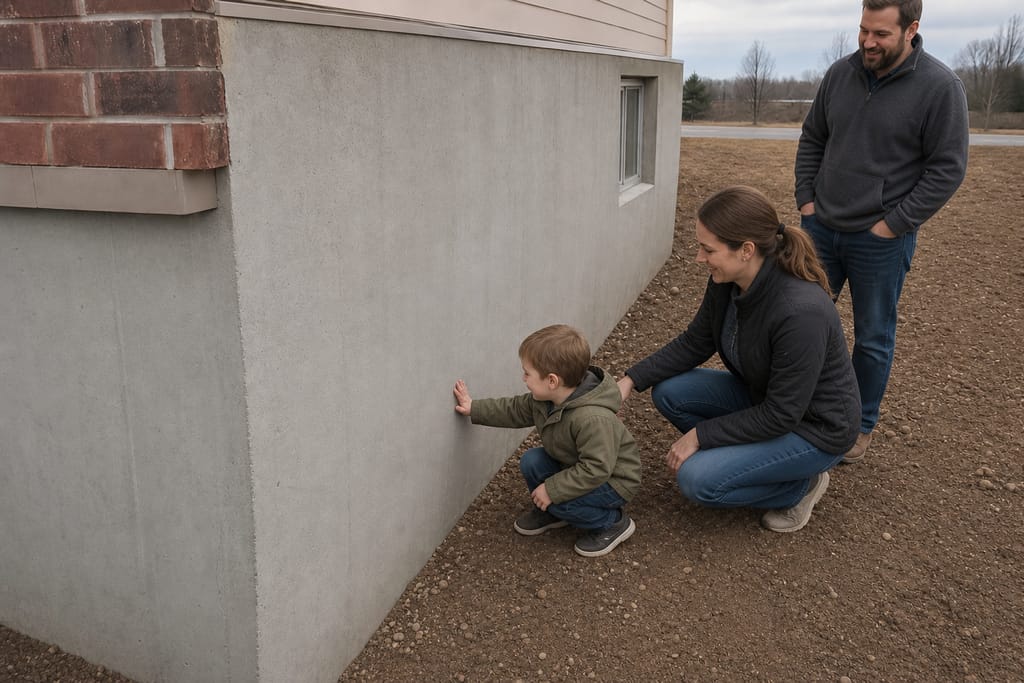
After
FAQs
Wall Stabilization FAQs
How much does a bowing wall get worse before it's an emergency?
A wall bowed less than an inch usually has time for a scheduled repair. Past that, or if you see new horizontal cracking, it's worth getting looked at soon rather than waiting out another season.
Can I fix a bowing wall myself?
No. Wall anchors and carbon fiber systems need to be sized to the actual pressure load, and getting that wrong can mean the wall keeps moving anyway. This is a job for an inspection, not a weekend project.
Do I need a permit for wall anchors or carbon fiber straps?
Structural wall anchor installs typically need a permit through Utah County or your city. Carbon fiber strap jobs sometimes don't, depending on scope. We'll confirm before work starts.
Will fixing the wall stop water from coming in too?
Stabilization addresses the structural movement, not necessarily the water. If moisture is part of the picture, pairing this with drainage correction or waterproofing handles both.
Next step
Get a Wall Stabilization estimate in Highland
Call Highland Foundation Pros at +1 (435) 701-4021 or email leads@highlandfoundationpros.com for a free estimate. We'll measure the wall, explain which method fits, and give you a number in writing before anything gets installed.
More services
Other Foundation Repair services
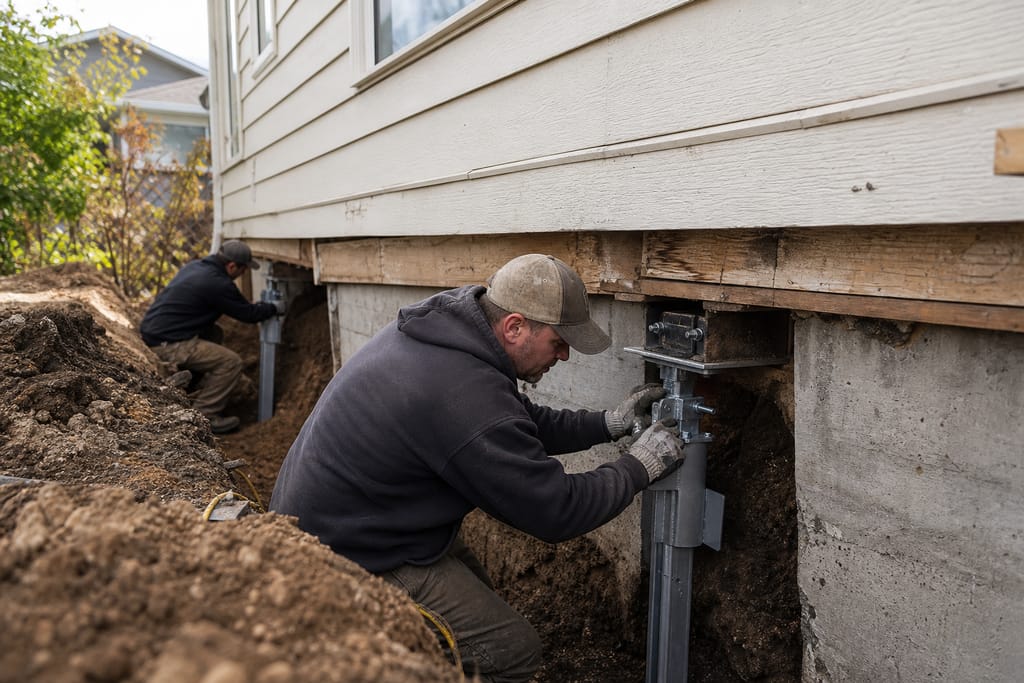
Foundation Repair
Foundation repair in Highland, UT covering crack injection, piering, underpinning, and wall stabilization, with free estimates.
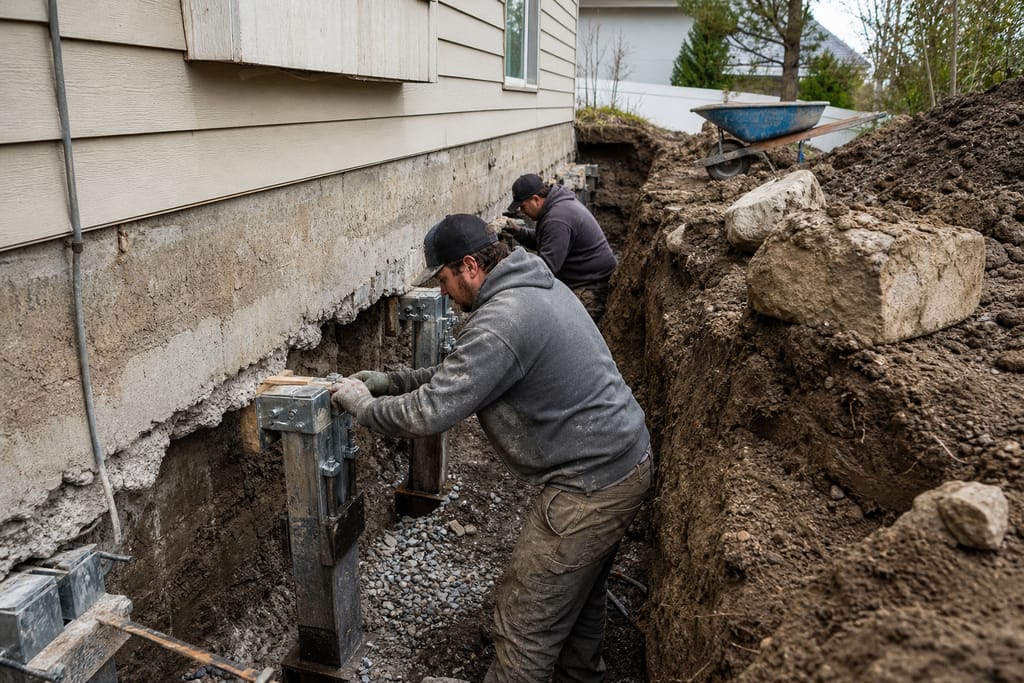
Piering and Underpinning
Helical and push pier underpinning for sloped bench-lot homes. Free estimates, written scope before any drilling.
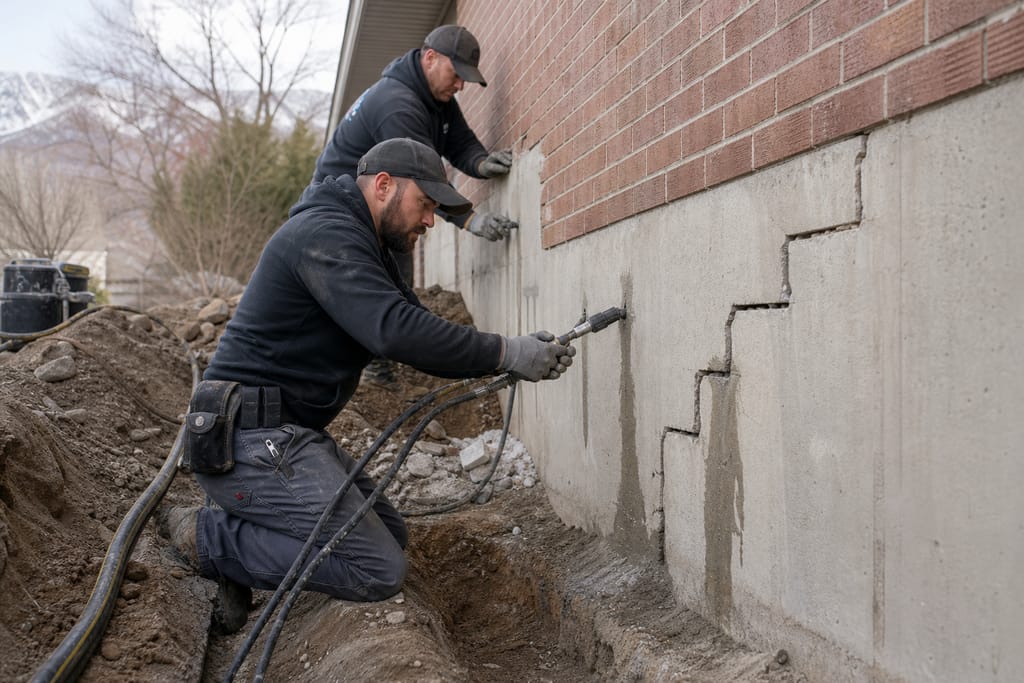
Foundation Crack Repair
Foundation crack repair in Highland, UT. Epoxy and polyurethane injection for hairline and structural cracks, free estimates.
Ask about Wall Stabilization
Tell us about the project and how to reach you.