
Highland Foundation Pros
Piering and Underpinning in Highland, UT
Helical and push pier underpinning for sloped bench-lot homes. Free estimates, written scope before any drilling.
- 15+ Years local experience
- 500+ Projects completed
- Licensed & Insured
Serving Highland and nearby communities.
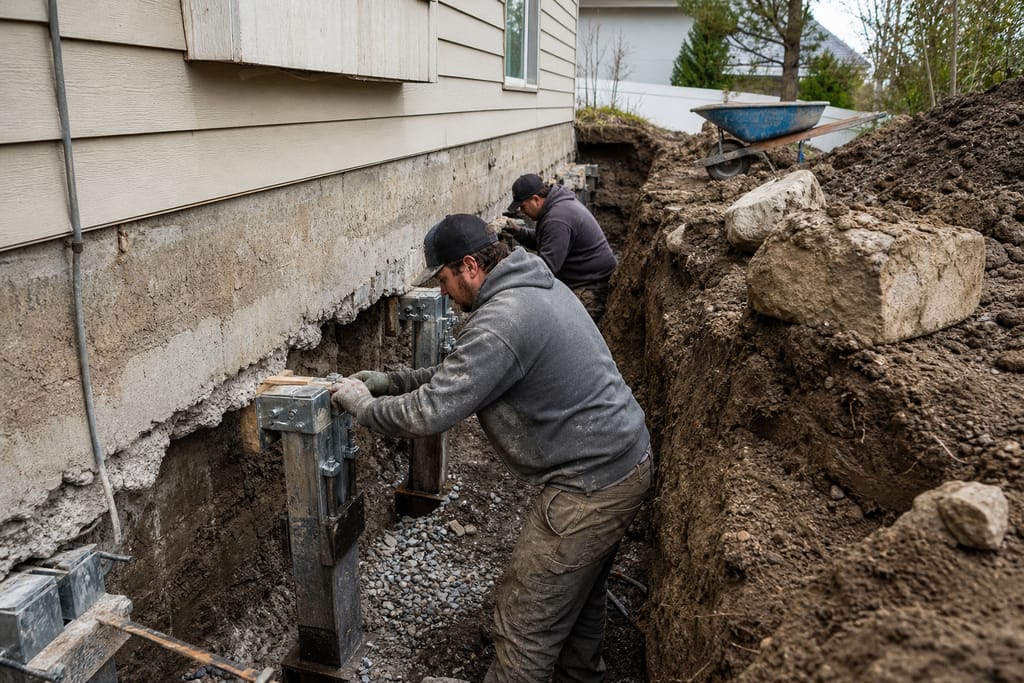
Underpinning puts new support under a foundation that's lost bearing capacity, usually because the native soil beneath it has compressed, shifted, or washed out. Highland Foundation Pros handles this with steel push piers or helical piers driven past the unstable surface soil to a depth that actually holds weight. On Highland's bench lots, that often means concentrating piers on the downhill side of the house, where sloped grading puts more load on soil that's still settling under newer construction.
This isn't a cosmetic patch. If a foundation corner has dropped an inch or more, or an inspector has flagged a bearing capacity issue, piering is the structural fix.
What's included
What's included
Typically included: soil assessment at each pier location, pier driving to refusal or design depth, bracket attachment to the footing, hydraulic lift to target elevation, backfill and compaction.
Optional: interior slab piers for sunken basement floors, monitoring points for future settlement checks.
Customer prep: clear a few feet of access around the foundation perimeter where piers will go in; move potted plants or yard decor out of the work zone.
Want a clearer scope?
Get a Free EstimateHow it works
How our Piering and Underpinning process works
 Step 1
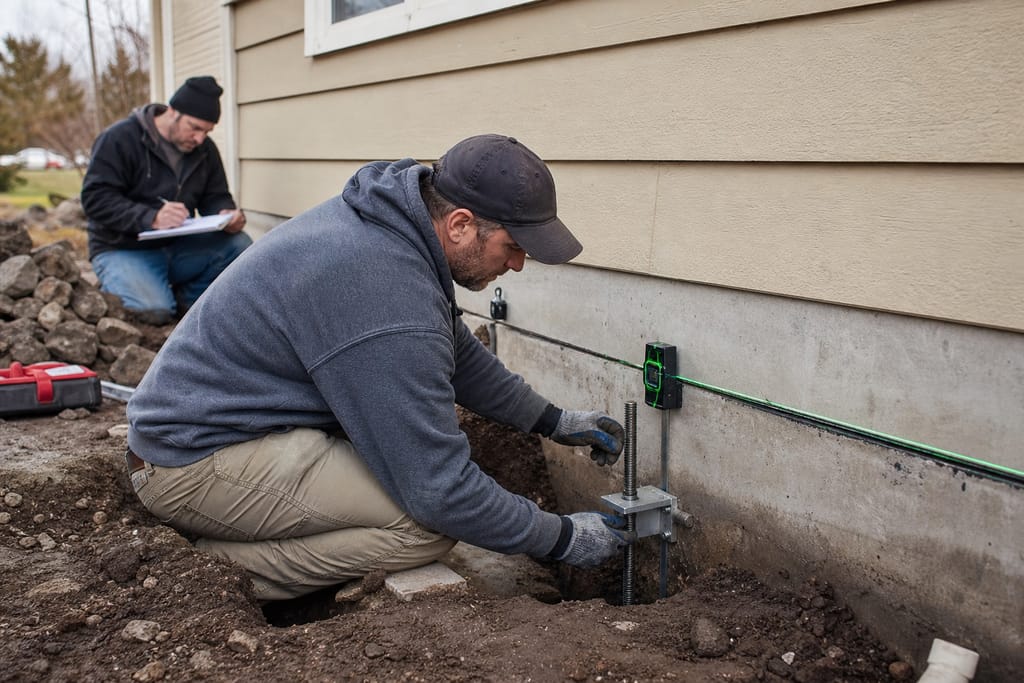
Load Assessment
We calculate how much weight each section of foundation needs supported.
 Step 2
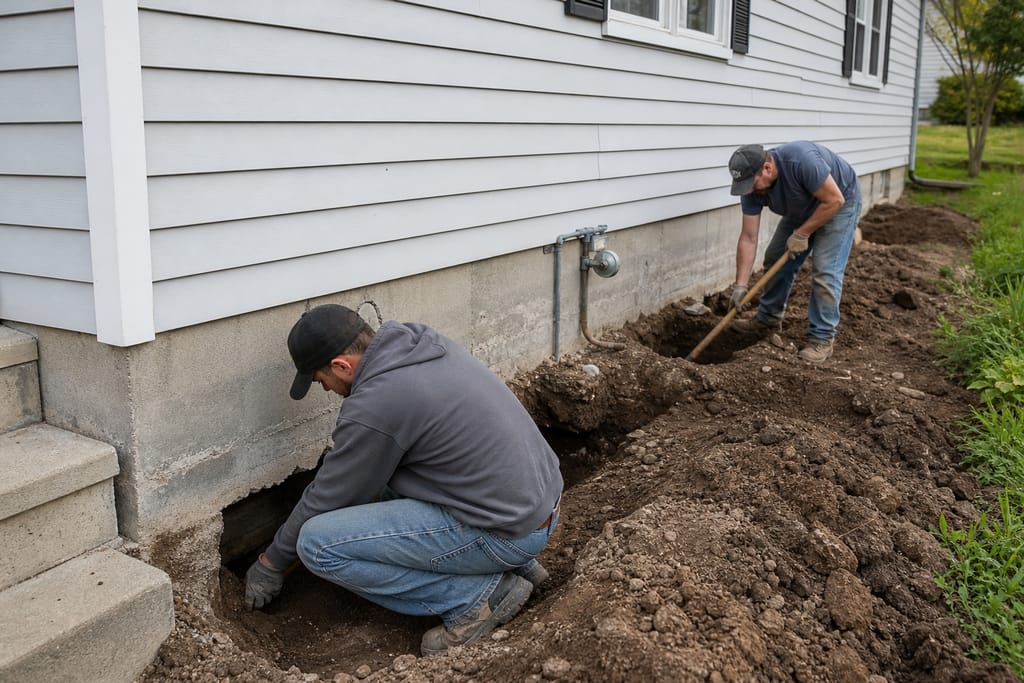
Access Excavation
Small dig points open up along the foundation at each planned pier location.
 Step 3
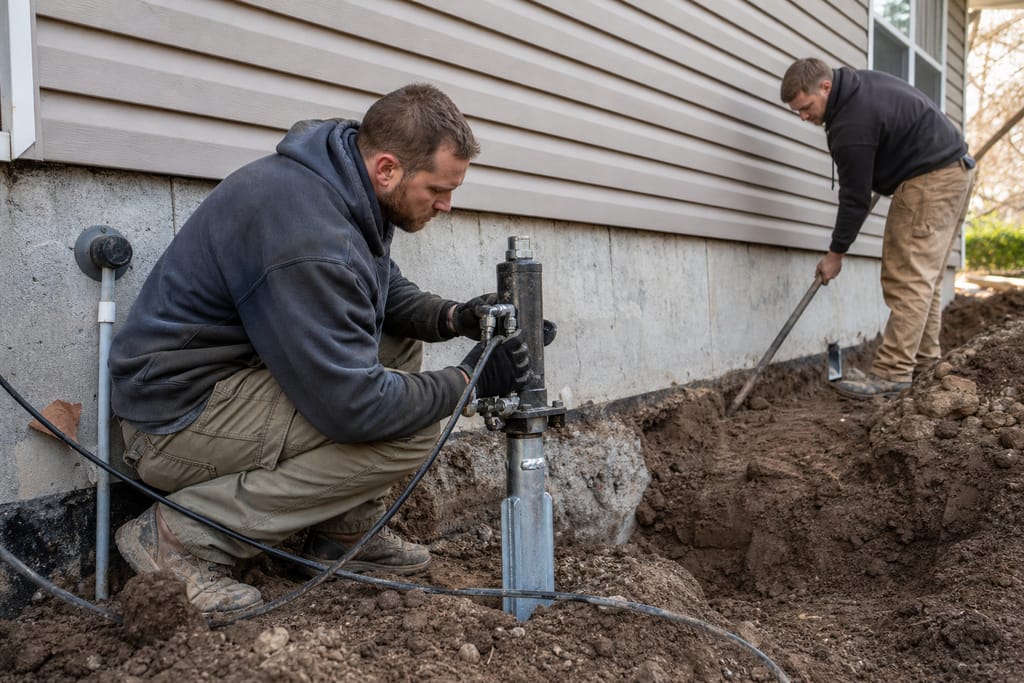
Pier Driving
Steel piers go in and keep driving until they hit stable bearing soil, not just depth.
 Step 4
Load Transfer
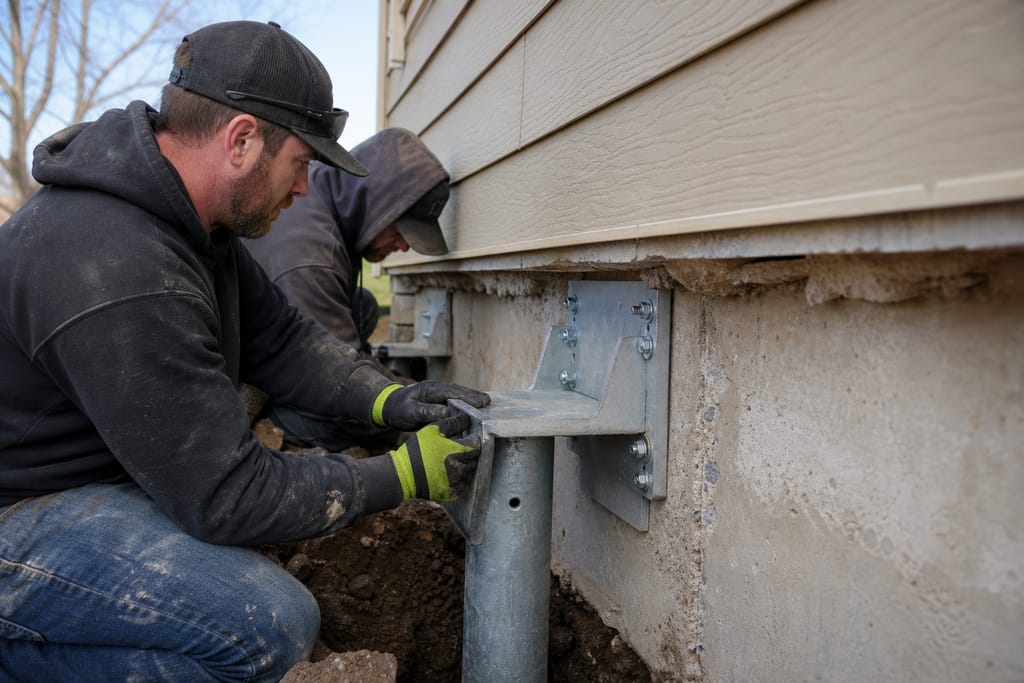
Brackets connect the pier to the footing so weight shifts off the bad soil.
 Step 5
Leveling Adjustment
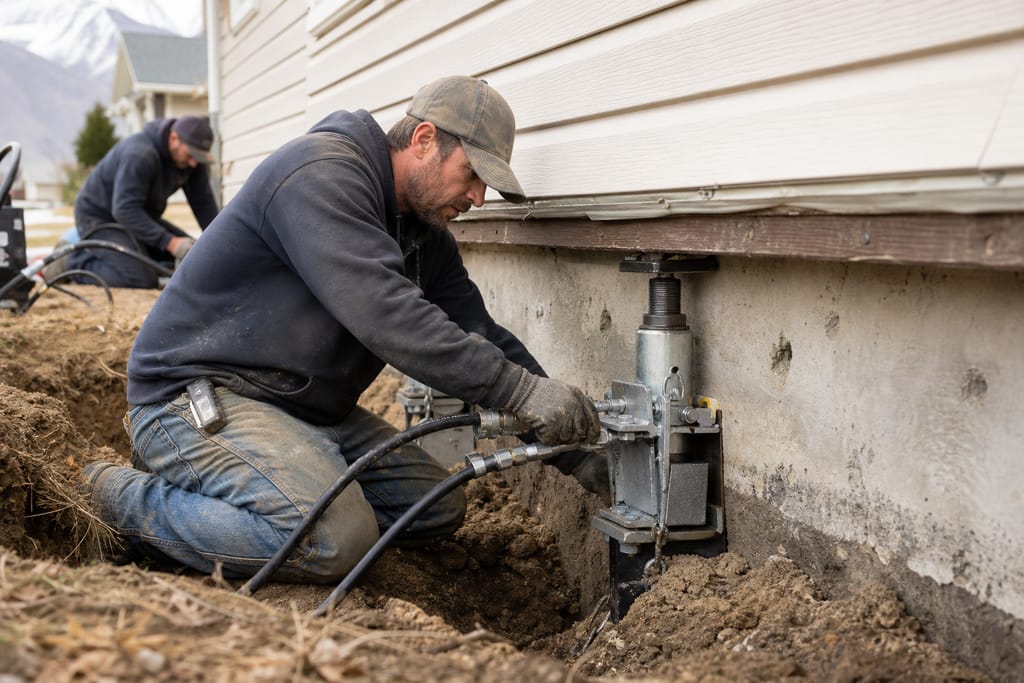
Hydraulic jacks lift the foundation back toward its original elevation.
 Step 6
Site Restoration
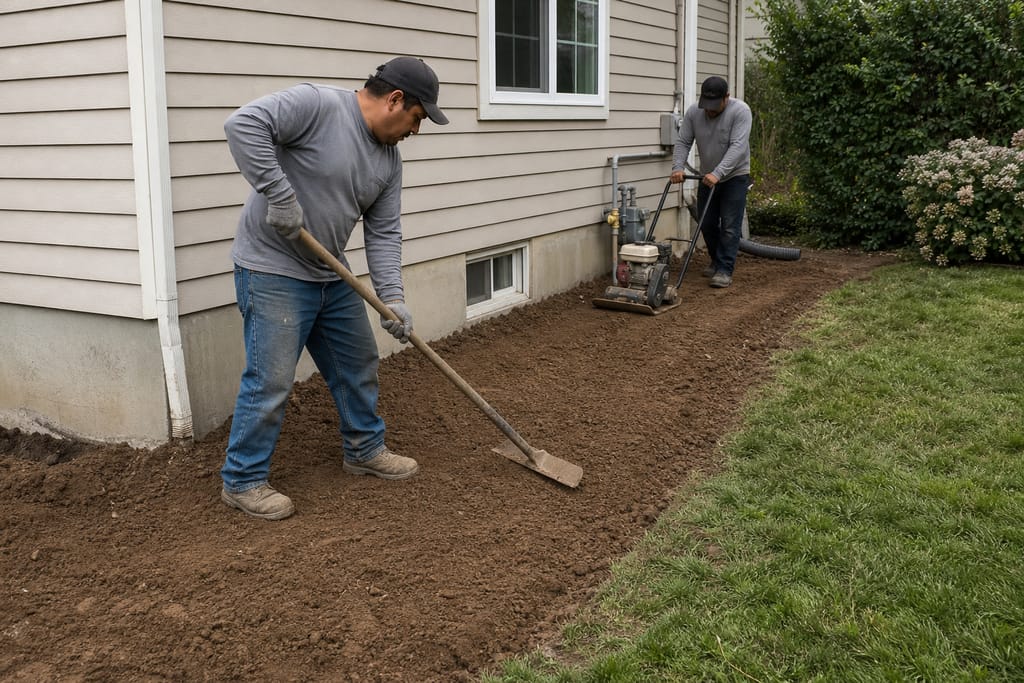
Excavated spots get backfilled and compacted to match the yard.
Materials
Materials and methods for Piering and Underpinning
Pier selection depends on soil conditions at depth, not a one-size answer picked off a price sheet.
Steel Push Piers
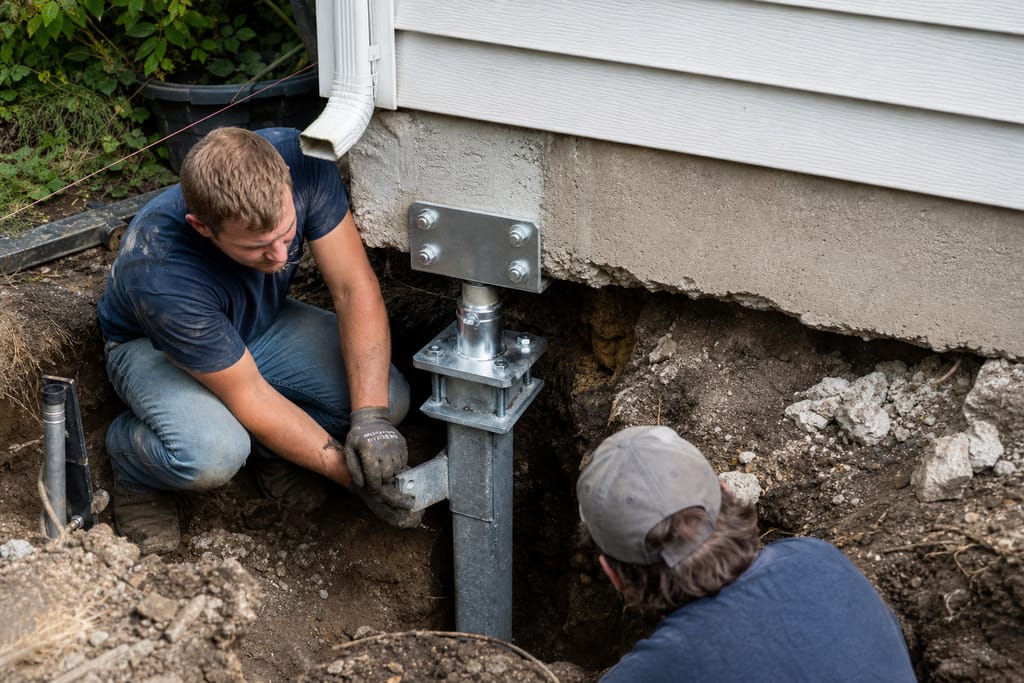
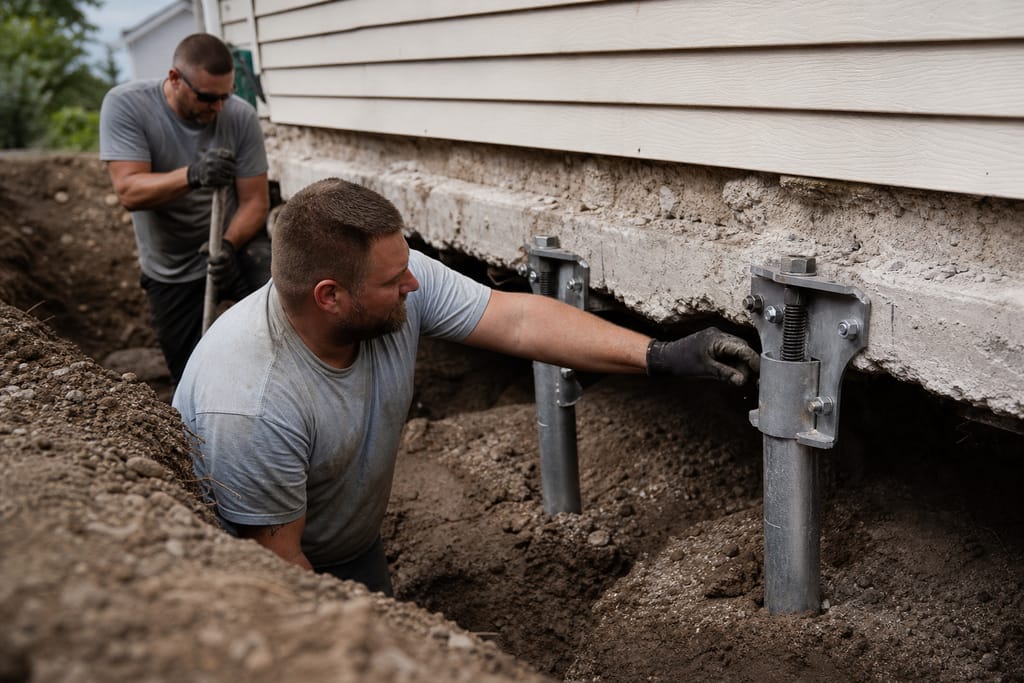
Driven hydraulically using the structure's own weight as resistance, these work well where Highland's clay layers sit above a firmer stratum.
Helical Piers
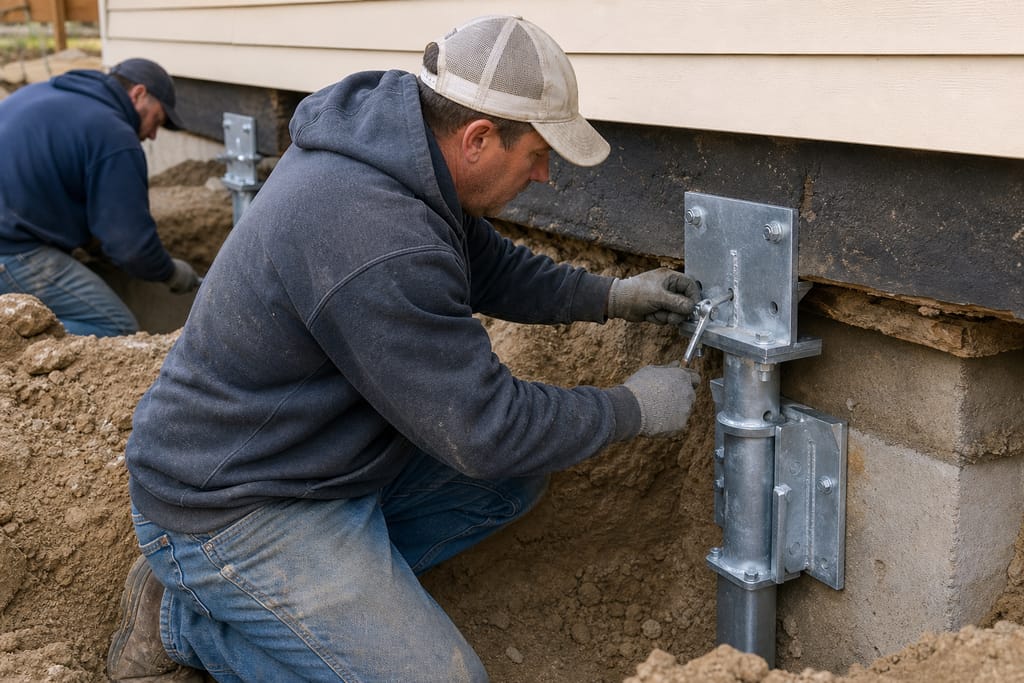
Screwed in with a torque rating that tells us exactly when they've reached load-bearing capacity, a good fit for lighter additions or porches.
Underpinning Brackets
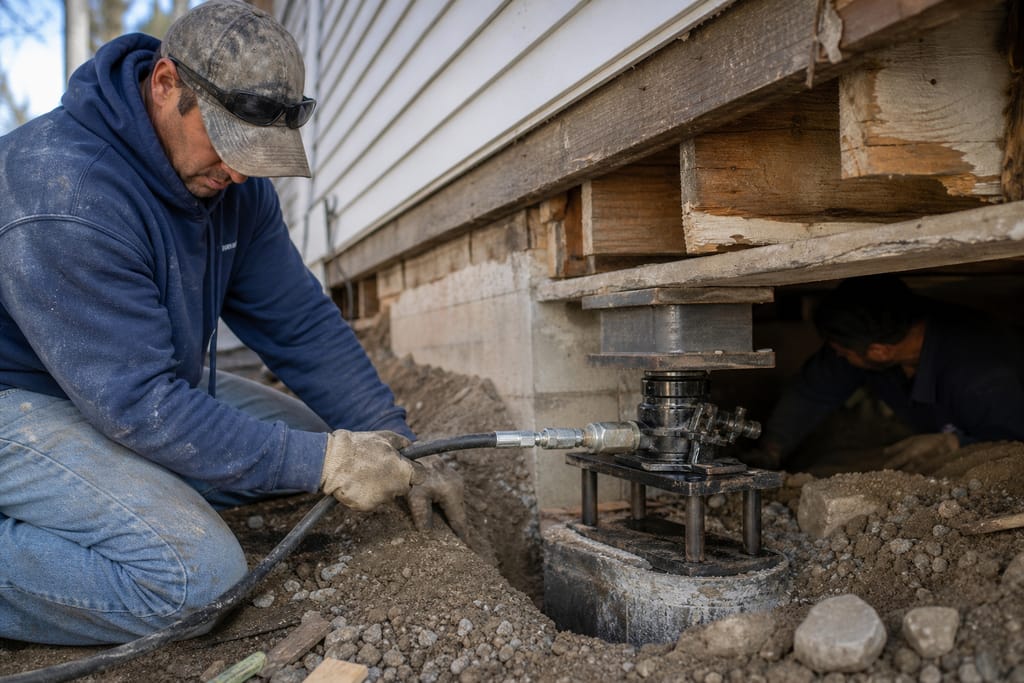
Connect piers securely to existing foundation footings.
Hydraulic Lift Systems
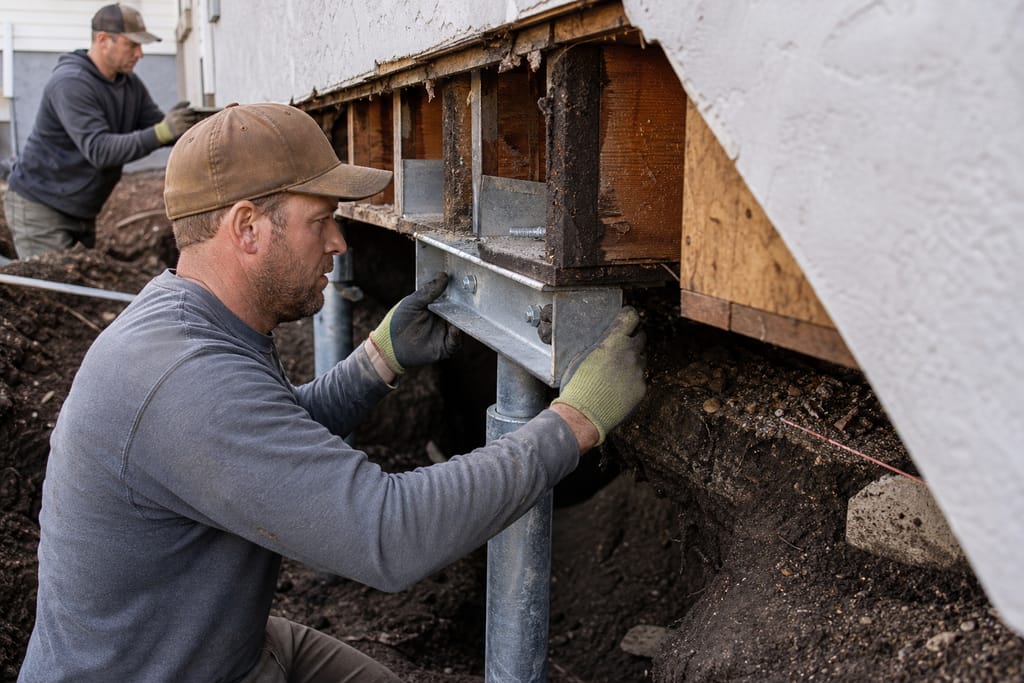
Used to achieve controlled and precise foundation elevation changes.
Galvanized Coatings
Keep piers from corroding in Utah County's moisture-holding clay soils over decades of service.
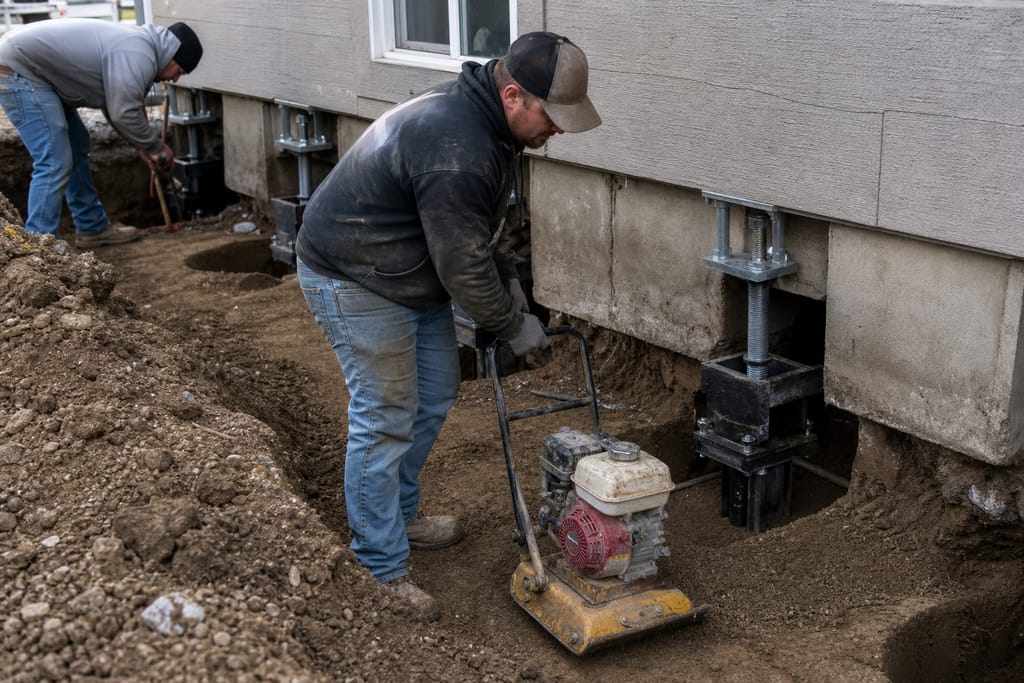
Compacted Fill Material
Used to stabilize soil around newly installed piers.
Questions on materials?
Get a Free EstimateTimeline
How long does a Piering and Underpinning take?
Most jobs run from a one-day site visit through a multi-day install depending on pier count.
- 01
Consult and soil check
same day - 02
Engineering plan and estimate
1–2 days - 03
Permit approval
1–2 weeks - 04
Pier installation
1–3 days - 05
Backfill and cleanup
same dayas final piers
Need a schedule that fits?
Get a Free EstimateBefore & after
Before and after Piering and Underpinning
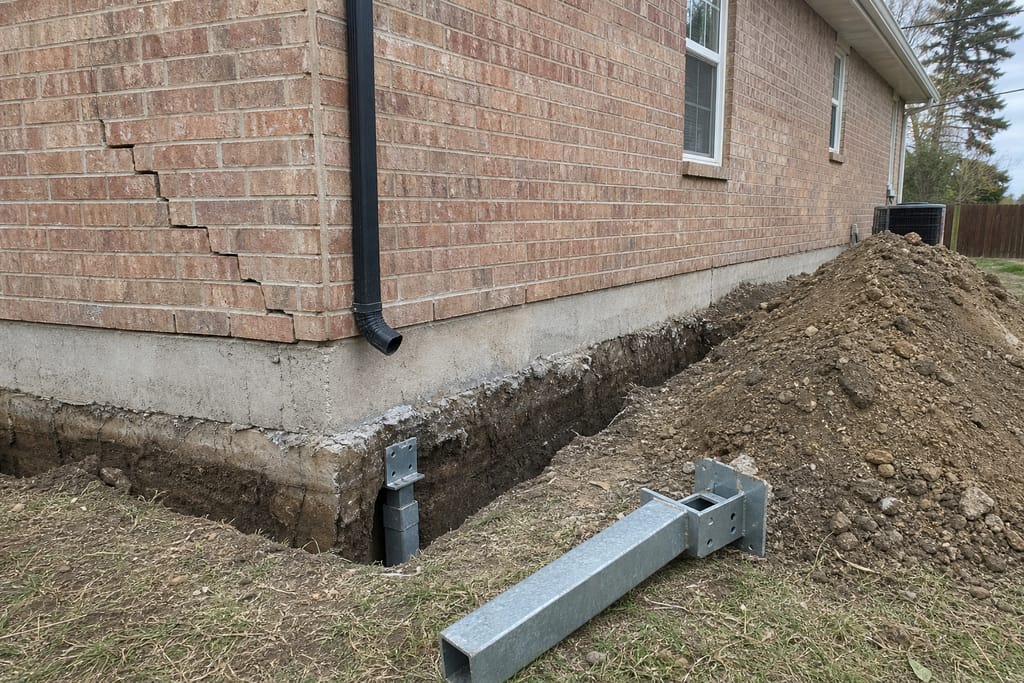
Before 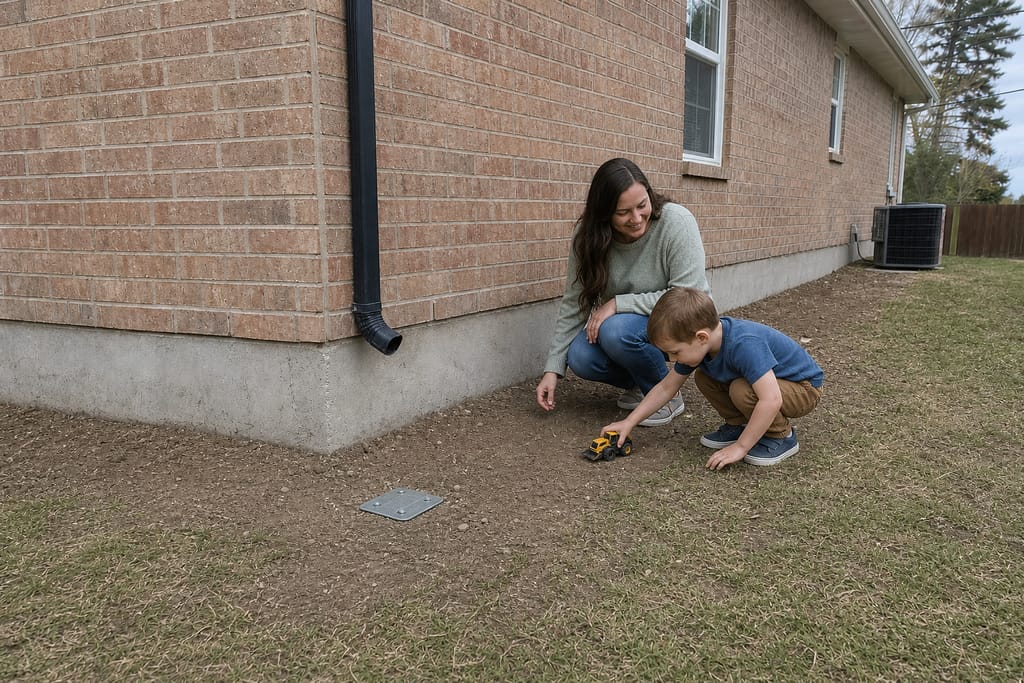
After
FAQs
Piering and Underpinning FAQs
Is underpinning necessary or just an upsell?
If a foundation corner has visibly dropped, doors are racking out of their frames, or an inspection shows bearing soil loss, underpinning addresses the actual cause. We only recommend it after confirming settlement with measurements.
How much does it cost to pier a foundation in Utah?
Cost scales with pier count and depth to stable soil, typically running from a few thousand dollars for a single corner to tens of thousands for whole-perimeter underpinning. A free estimate gives you an exact number for your house.
How deep do piers need to go?
Deep enough to reach soil or bedrock that can actually carry the load, which varies lot to lot. We don't guess at depth, we drive or screw until resistance confirms it.
Will underpinning stop future settlement completely?
It stops settlement at the supported points by transferring load to stable soil. It doesn't change drainage or soil conditions elsewhere on the property, which is why we sometimes recommend drainage work alongside piering.
Can I pier just one corner instead of the whole foundation?
If settlement is isolated to one area, yes. We only recommend piers where the assessment shows they're needed.
More services
Other Foundation Repair services
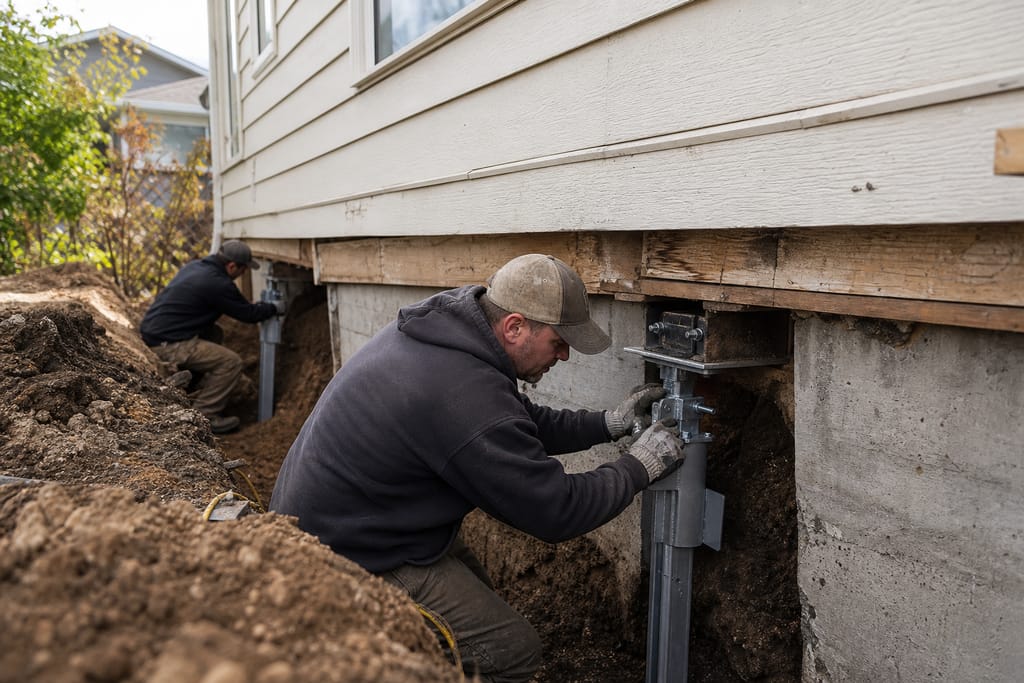
Foundation Repair
Foundation repair in Highland, UT covering crack injection, piering, underpinning, and wall stabilization, with free estimates.
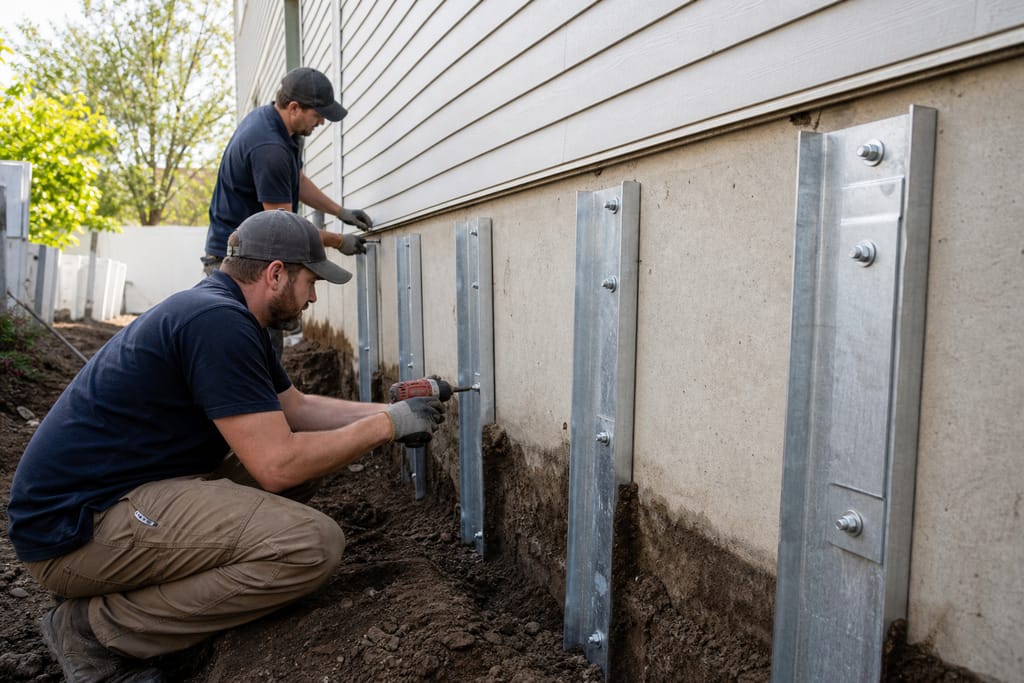
Wall Stabilization
Bowing basement wall repair using carbon fiber straps or steel anchors. Free estimates, methods matched to the problem.
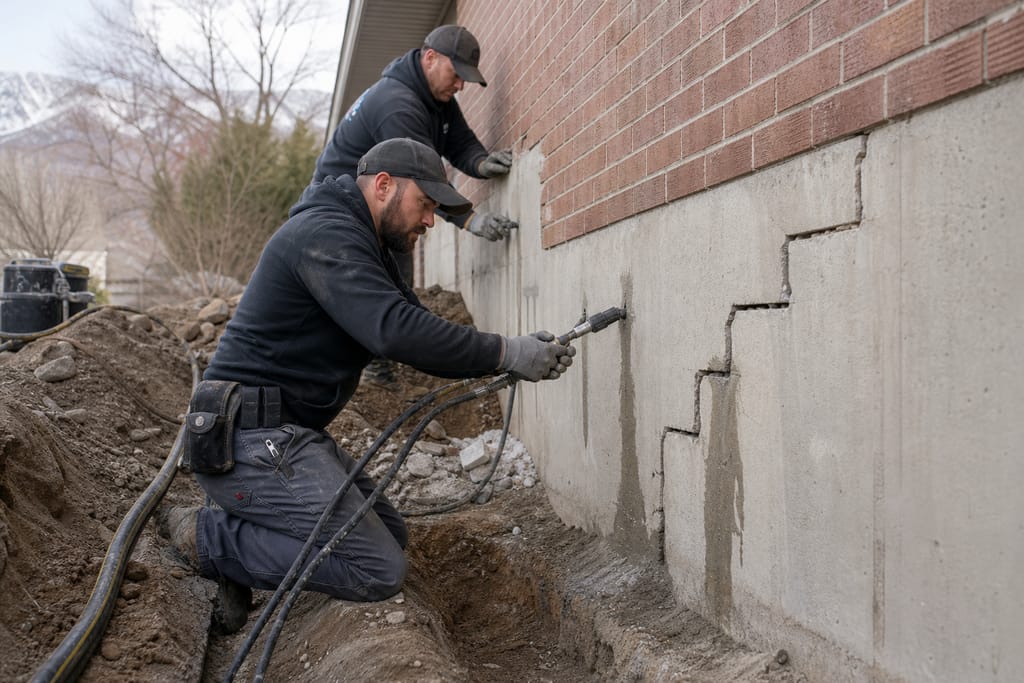
Foundation Crack Repair
Foundation crack repair in Highland, UT. Epoxy and polyurethane injection for hairline and structural cracks, free estimates.
Ask about Piering and Underpinning
Tell us about the project and how to reach you.